

Description
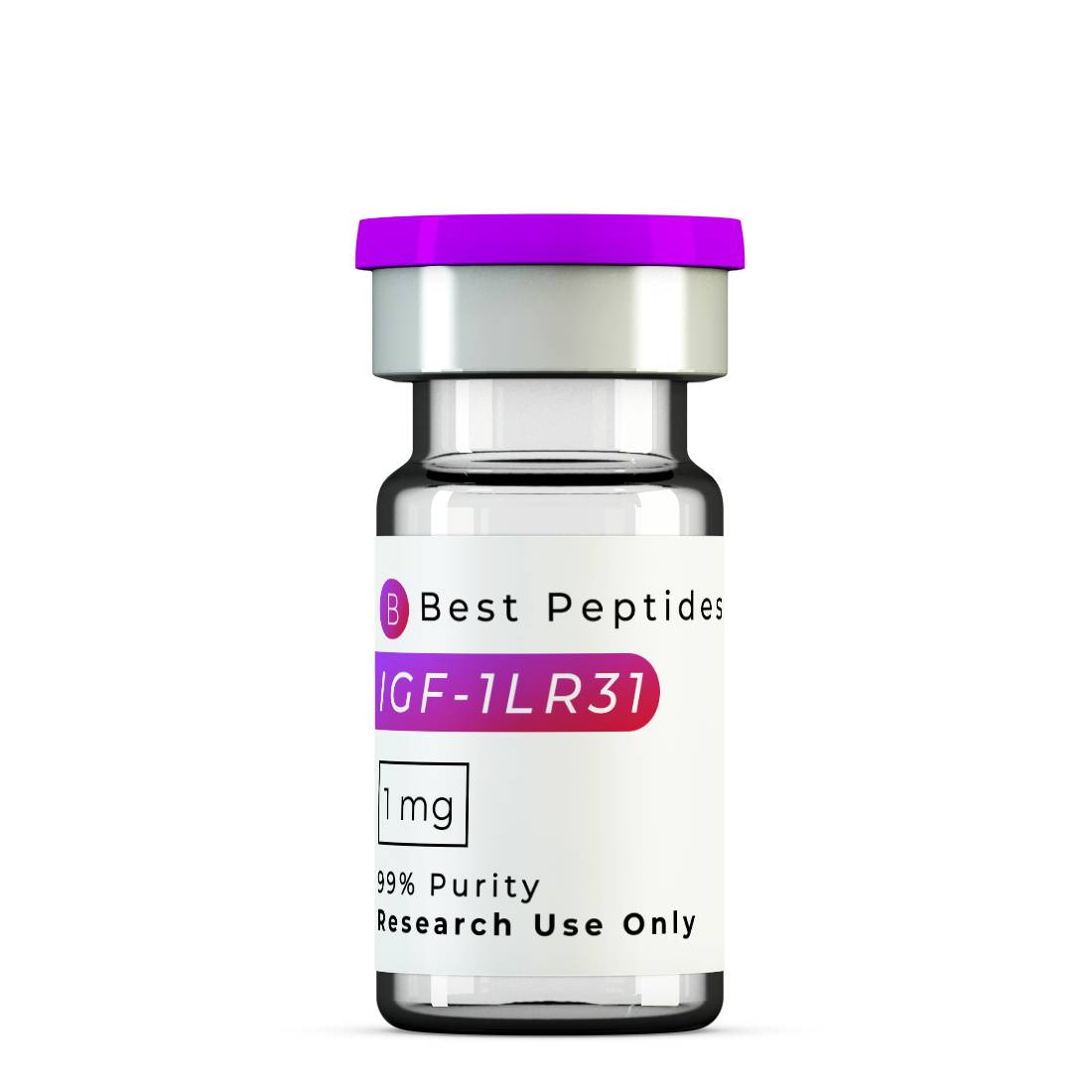
Insulin-like Growth Factor 1 Long Arg3 (IGF-1 LR3), an analog of human IGF-1, is designed to have several functions in the body by extending the half-life of its effects compared to the natural form. Here are the key functions and attributes:
- Growth Promotion: Like IGF-1, IGF-1 LR3 promotes growth in almost every cell of the body, primarily muscle, cartilage, bone, liver, kidney, nerve, skin, hematopoietic, and lung cells.
- Increased Potency: It has been modified with the substitution of an Arg (R) for the Glu (E) at position three, hence the name R3, and a 13 amino acid extension peptide at the N-terminus. These modifications have increased the potency of IGF-1 LR3 compared to IGF-1.
- Longer Half-life: IGF-1 LR3 has a reduced binding affinity for known IGF binding proteins, which regulate the biological actions of IGF-1. This results in a longer half-life in the circulation.
- Anabolic Effects: It can stimulate hypertrophy and regeneration of muscle by binding to receptors in muscle tissue. This is why it is often of interest in bodybuilding, albeit its use is controversial and not approved for bodybuilding purposes.
- Protein Synthesis: IGF-1 LR3 is known to increase the synthesis of protein in the body, reduce protein degradation, and improve RNA synthesis.
- Glucose Metabolism: It may alter glucose metabolism by reducing the reliance on insulin.
- Research Applications: In scientific research, IGF-1 LR3 is used to understand growth factor’s role in cell cultures or in vivo to promote cellular growth, IGF-1 receptor activation, and increase the half-life of IGF-1.
It’s important to note that while the therapeutic and anabolic potential of IGF-1 LR3 is significant, it is primarily used for laboratory research purposes and not approved for human use by regulatory agencies like the FDA.
Reviews
There are no reviews yet.